
Hairstyles
14 Wavy Pixie Hairstyles for Black Women
On this page
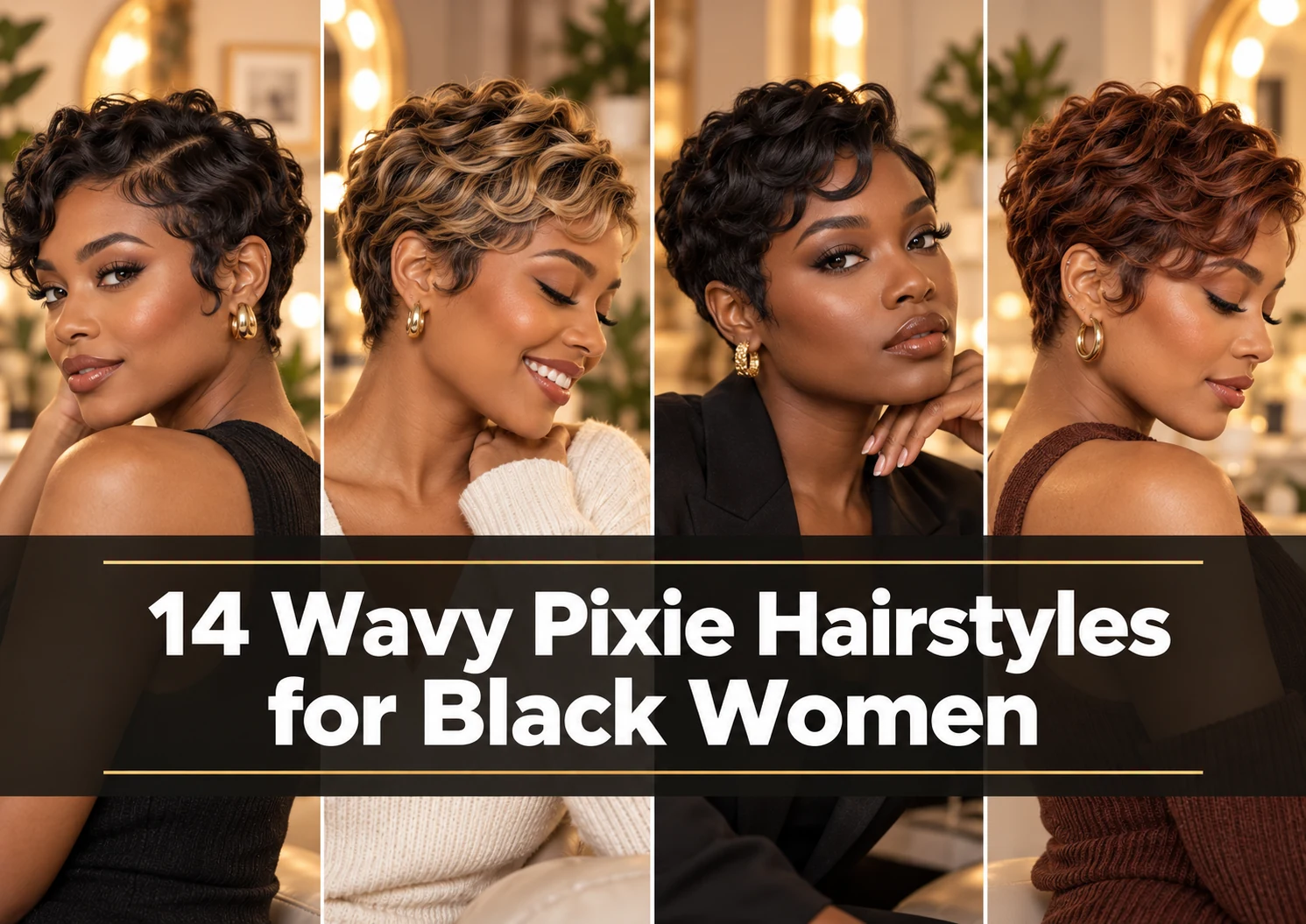
A wavy pixie can look polished, soft, or deliberately sculpted depending on how the waves are placed. Black women can wear the texture naturally, create it with a braid-out or twist-out, or shape it into classic finger waves for a close glossy finish.
The cut matters as much as the styling method. These fourteen ideas explain where the hair is short, where the wave has room to move, and how each shape changes the overall feel of a pixie.
1. Soft Tapered Wavy Pixie
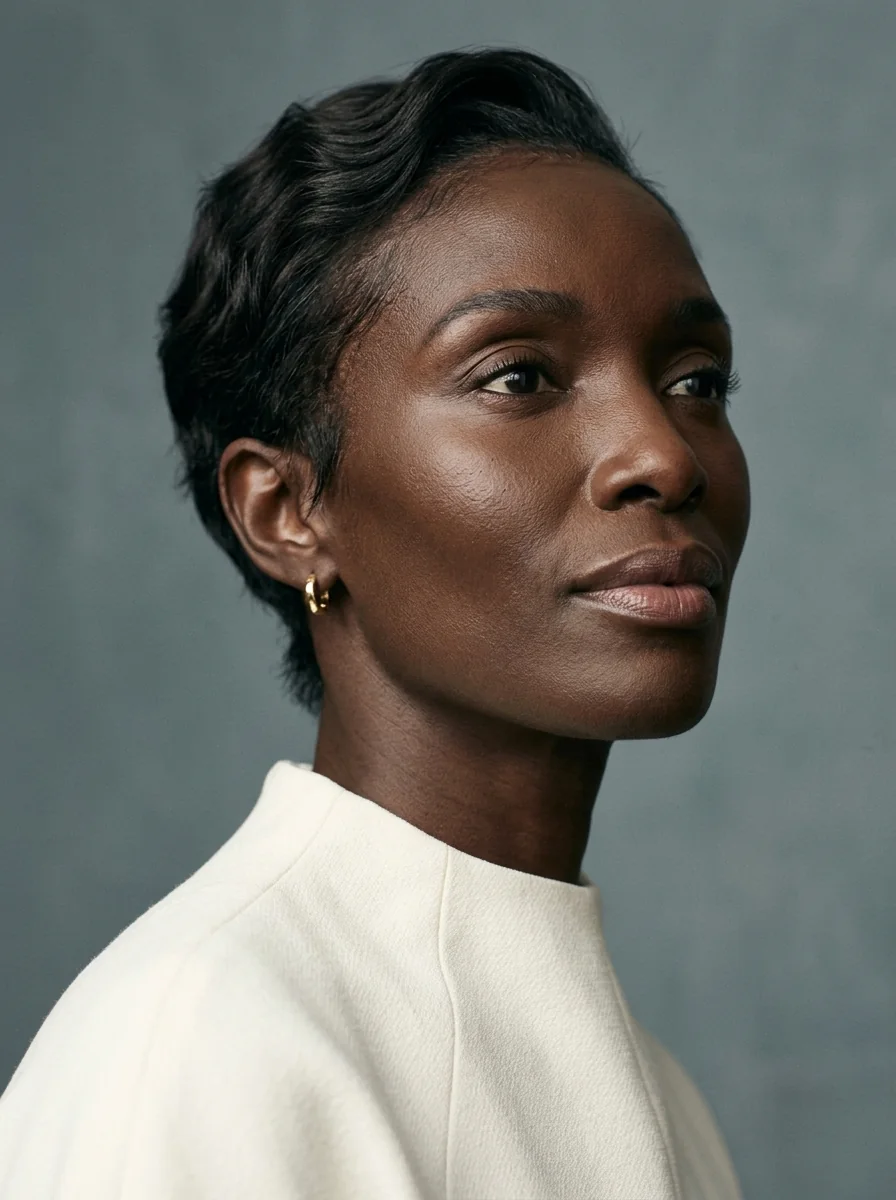
A soft tapered wavy pixie keeps the sides and nape short while leaving the crown long enough for loose bends to show. The taper gives the back a neat outline, while the wavy top prevents the style from looking too severe.
Apply a light mousse to damp hair and direct the crown slightly forward or to one side. Let the waves dry without brushing them out, then loosen only the roots if you want a little more height.
2. Deep-Side-Part Wavy Pixie
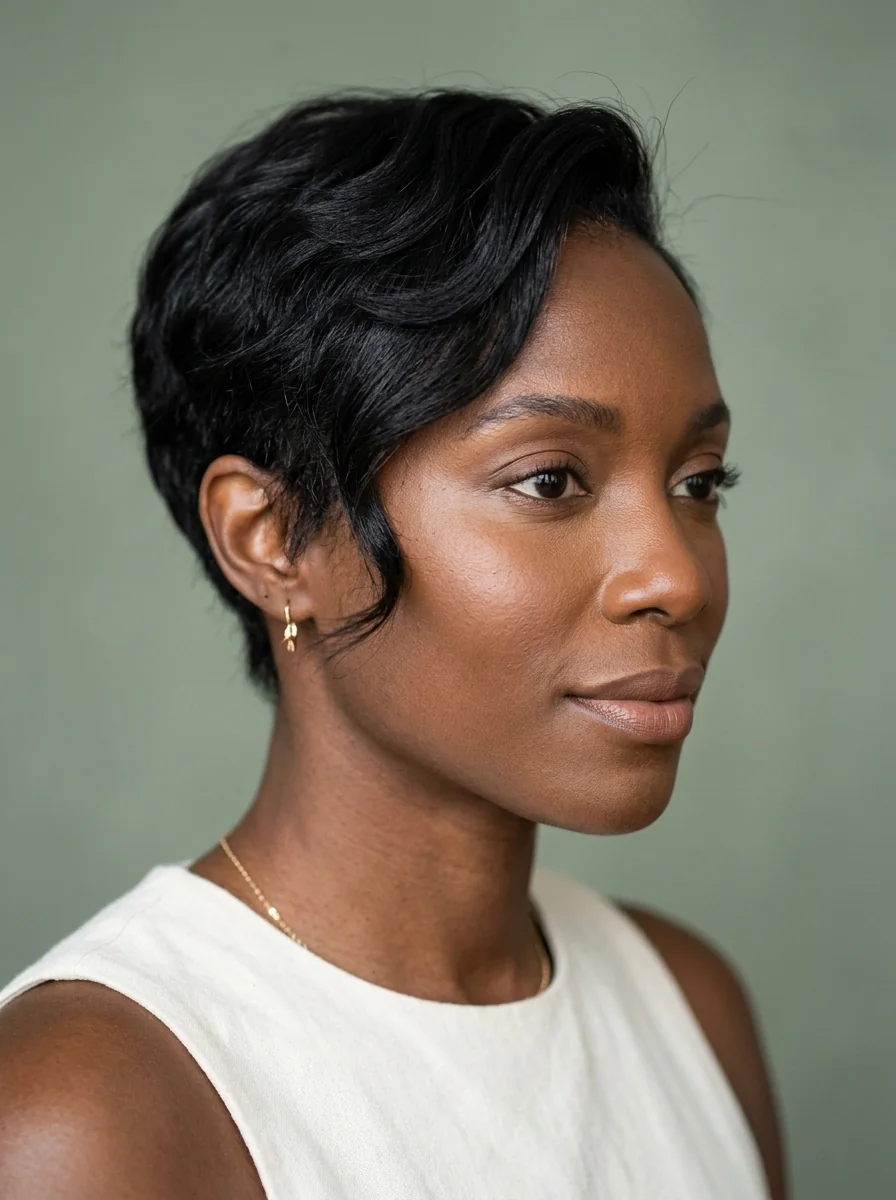
This cut uses a deep side part to place most of the wave volume on one side of the head. The lighter side is tucked close to the temple, creating a clear change in weight that makes the short cut feel elegant.
Set the part while the hair is damp or freshly styled so it does not disappear as the waves dry. A small amount of edge control can smooth the lighter side, but the heavier side should stay touchable rather than stiff.
3. Classic Finger-Wave Pixie
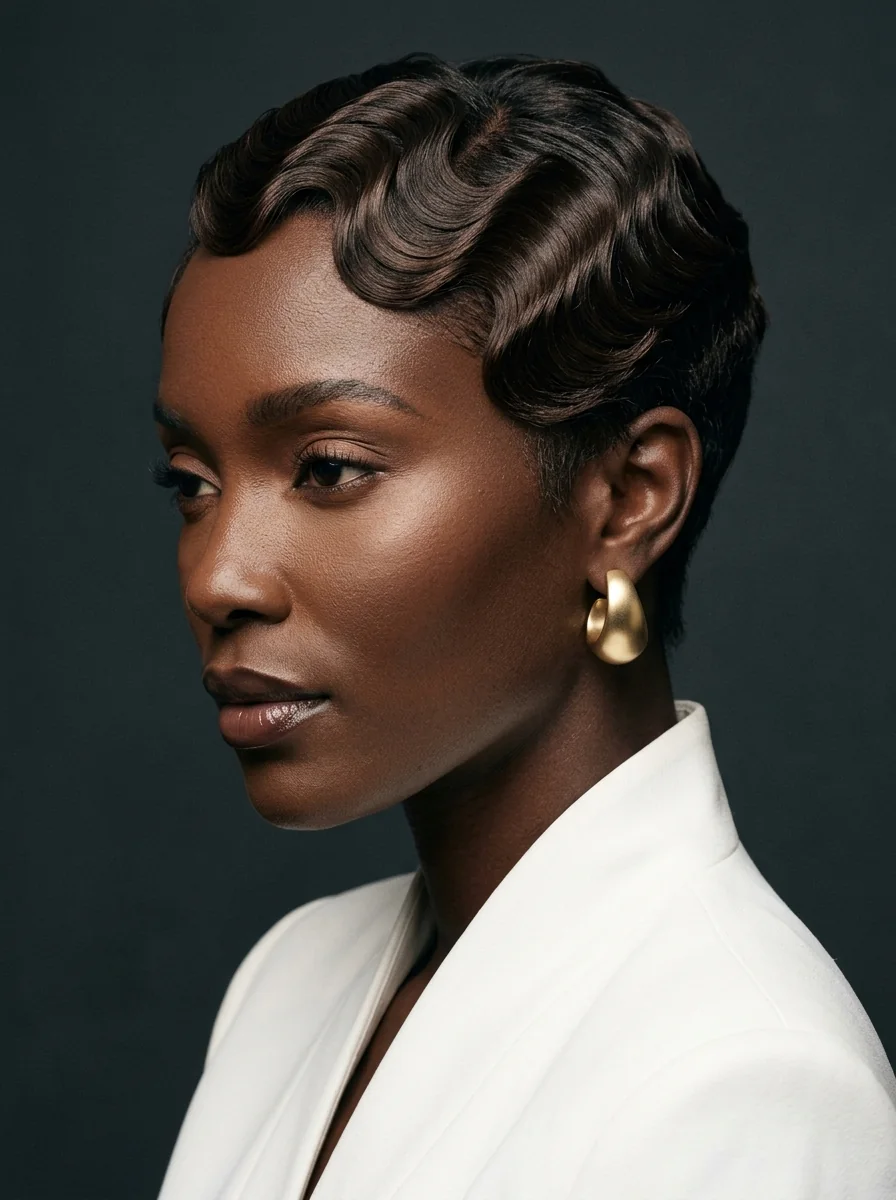
A classic finger-wave pixie shapes the front and sides into connected S-shaped ridges that sit close to the head. The neckline is usually tapered simply, allowing the wave pattern around the face to remain the main feature.
Use a fine comb and setting gel on damp hair, working in small sections from the part outward. Cover the style with a satin scarf while it dries, then remove the scarf gently so the ridges keep their definition.
4. Brushed-Back Wavy Pixie
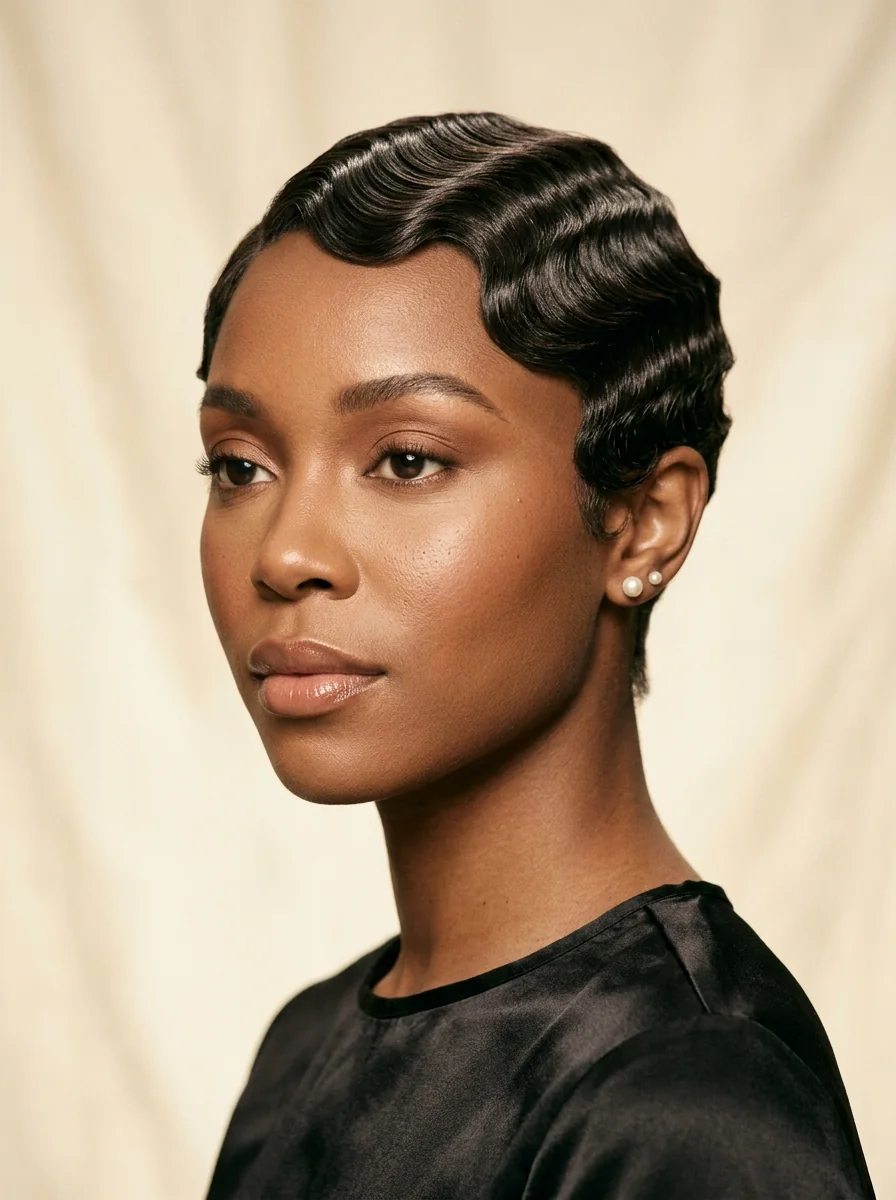
A brushed-back wavy pixie directs the front away from the face while the crown keeps a low, visible wave pattern. The sides and neckline are kept short, giving the style a clean shape that feels confident without looking rigid.
Use a light styling cream or mousse and brush the front backward with your fingers or a soft brush. Let the waves remain slightly imperfect at the crown, because a little movement keeps the finish natural.
5. Wavy Pixie Bob
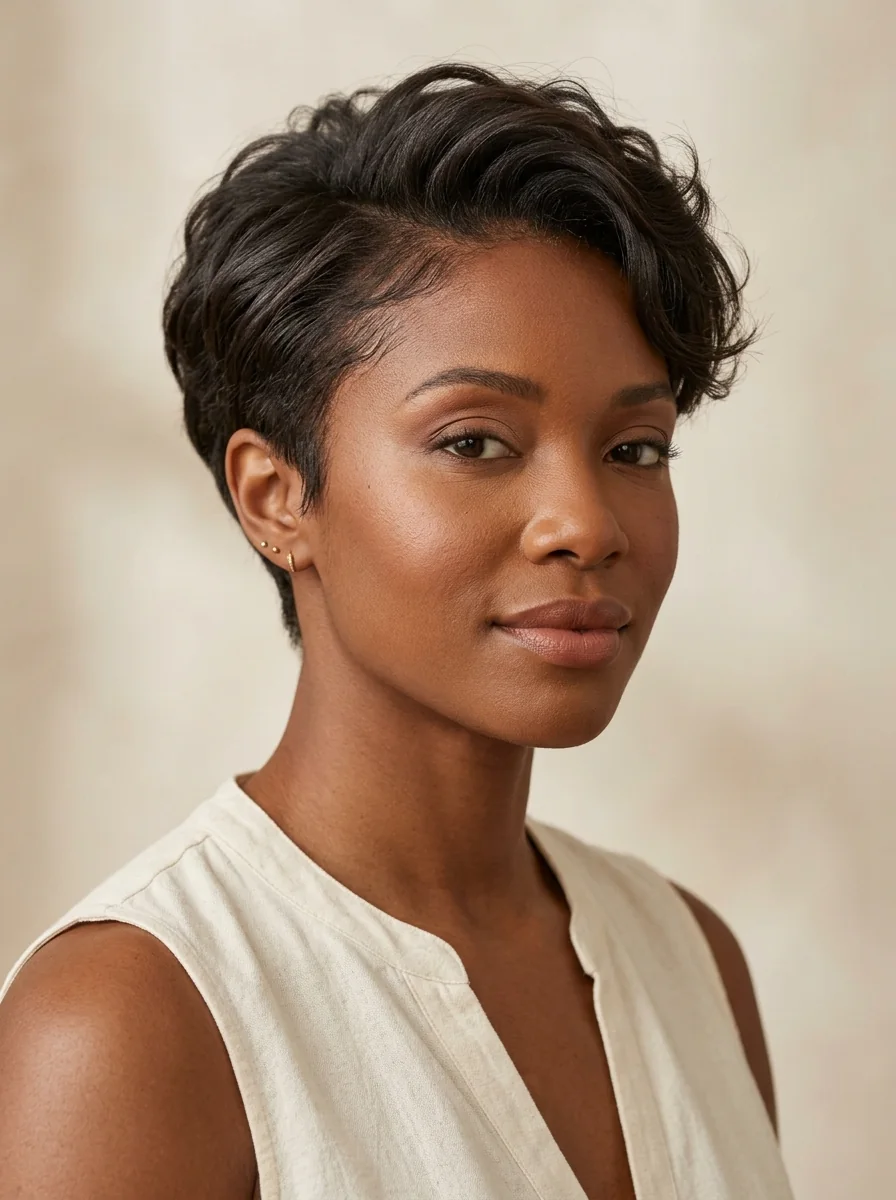
A wavy pixie bob leaves more length around the ears, sides, and front than a traditional pixie. The back can be tapered lightly, but the longer sections fall in loose bends toward the jaw or cheek.
This style is helpful if you want to move gradually into shorter hair. Keep the perimeter softly shaped so the waves do not form a triangular outline, and use a light product that supports movement instead of creating a hard cast.
6. Tousled Crown Pixie
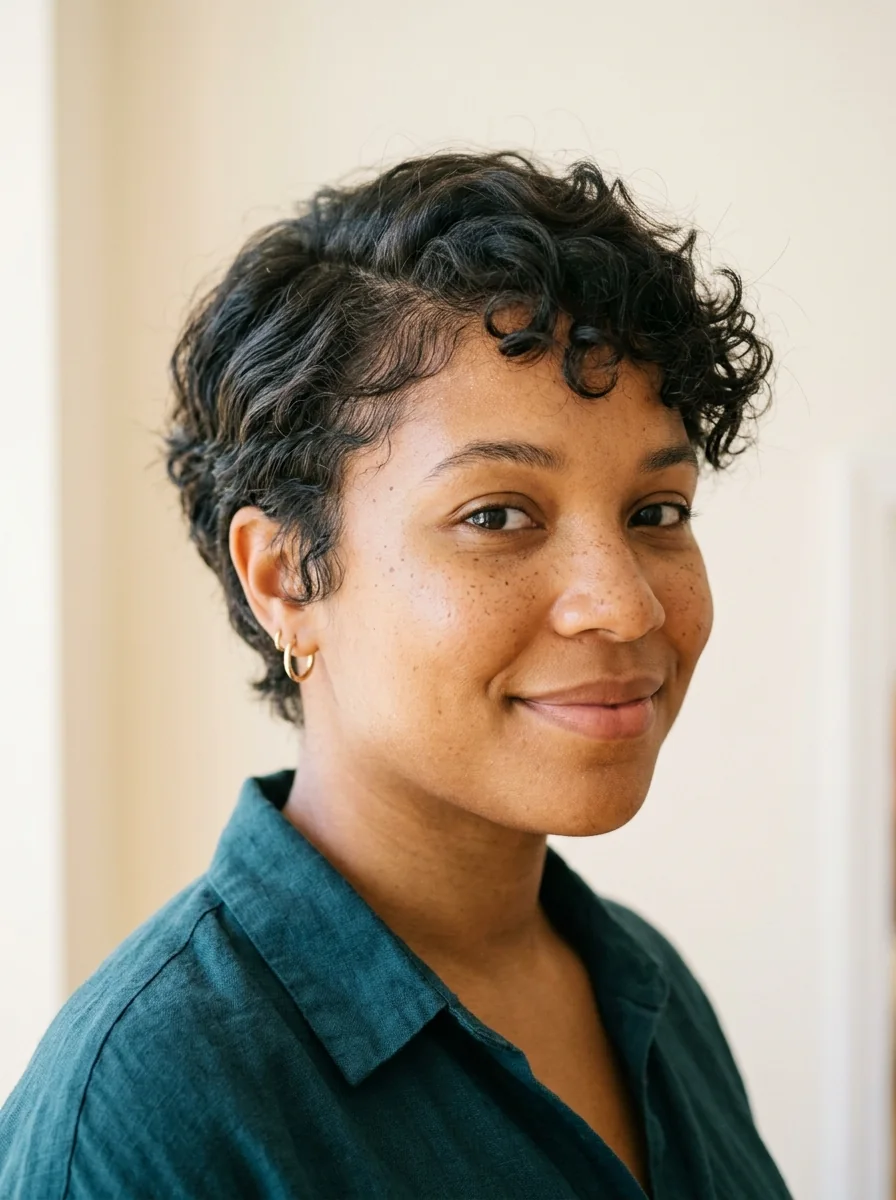
A tousled crown pixie keeps the sides close and builds an intentionally irregular wave pattern through the top. The crown looks fuller and more relaxed than a smooth crop, while the short perimeter keeps the overall haircut tidy.
Create the texture with a twist-out, braid-out, or a small amount of texturizing foam. Separate the waves with your fingertips after the hair is dry, then stop before the style becomes fluffy.
7. Wavy Fringe Pixie
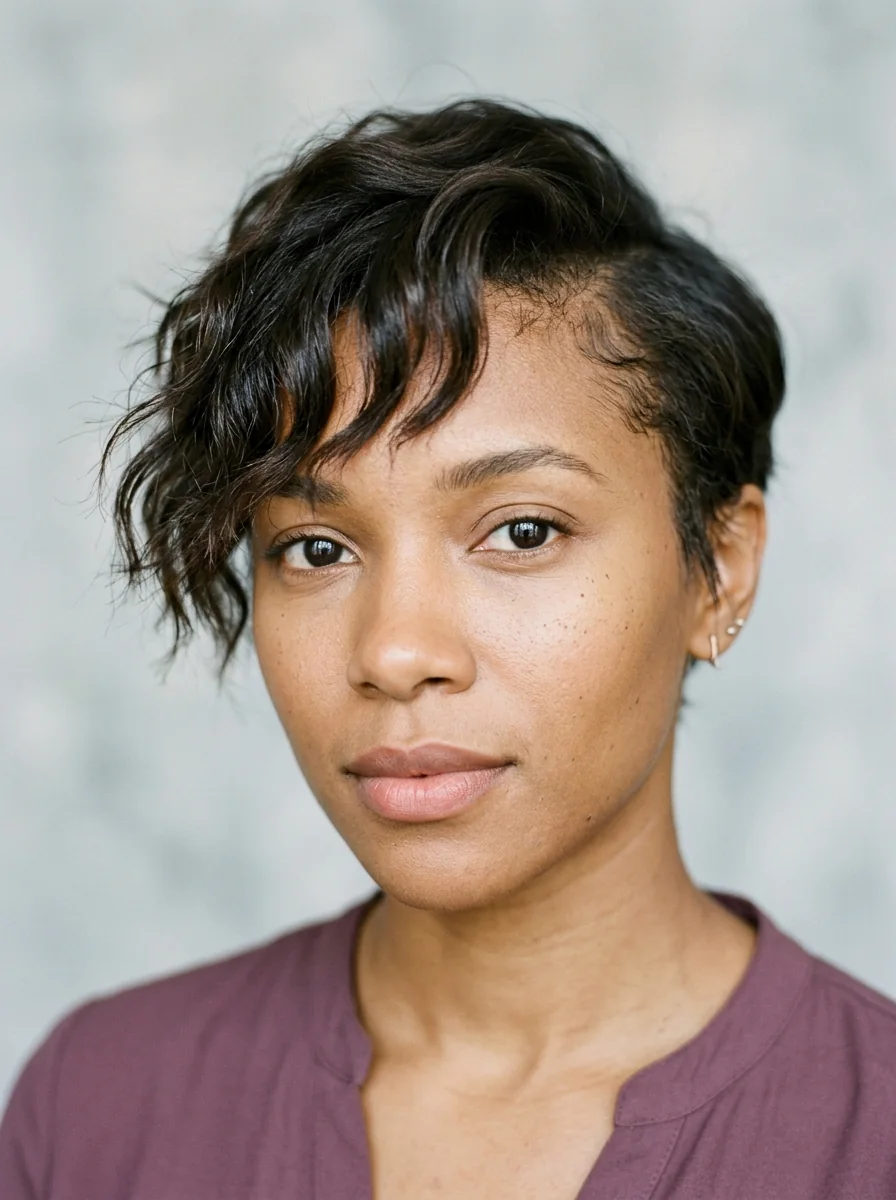
A wavy fringe pixie leaves the front longer so it bends across the forehead or rests just above the eyebrows. The rest of the head is tapered or lightly cropped, making the fringe the main face-framing detail.
Check the length on dry hair before cutting the final edge, because waves can spring upward as they dry. Style the fringe with a small brush or your fingers and keep the ends soft instead of forcing them into a perfectly straight line.
8. Sculpted S-Wave Pixie
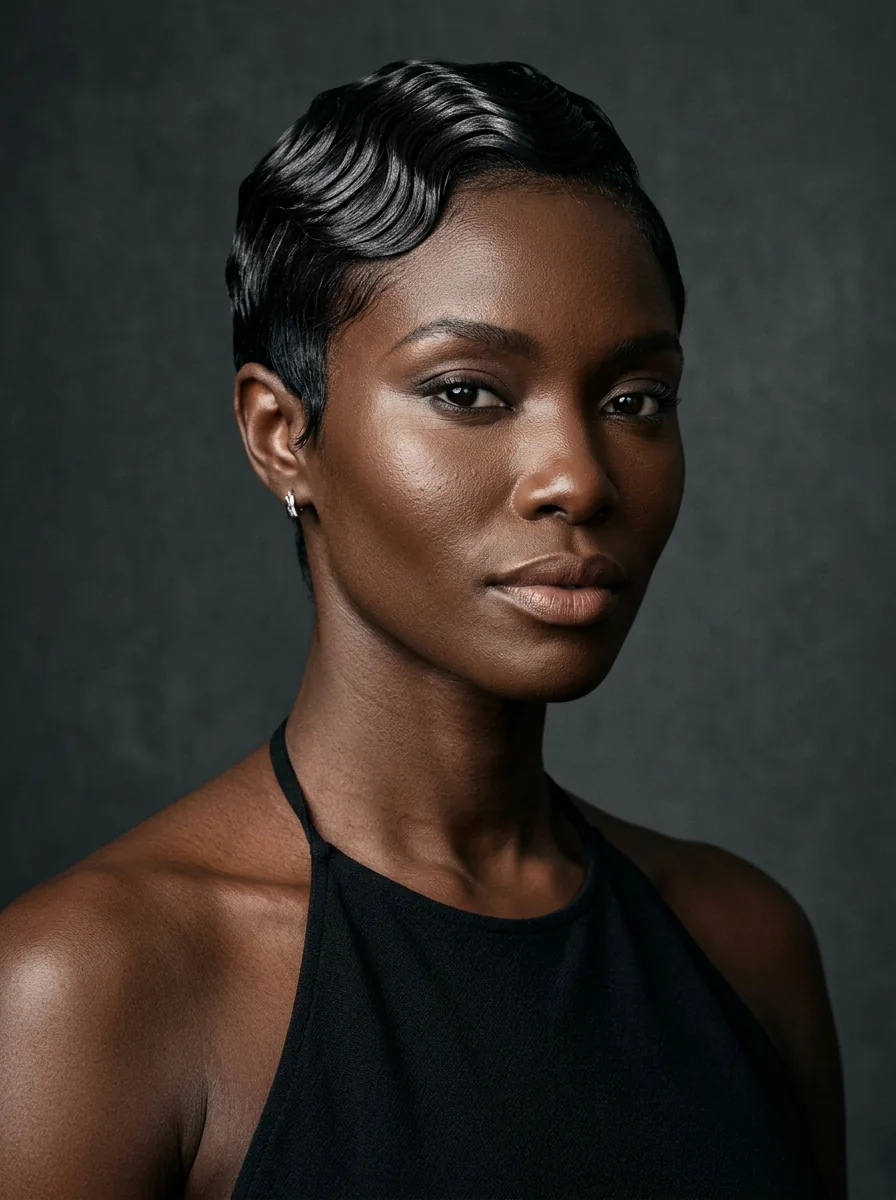
A sculpted S-wave pixie uses larger, deliberate waves across the front and top rather than a loose all-over texture. The pattern feels polished and graphic, especially when the sides and nape are cut close to emphasize the curves.
Shape the waves with a comb and a firm but flexible gel while the hair is damp. Let the style set under a scarf or hooded dryer, then use a tiny amount of serum on the surface if you want extra shine.
9. Asymmetrical Wavy Pixie
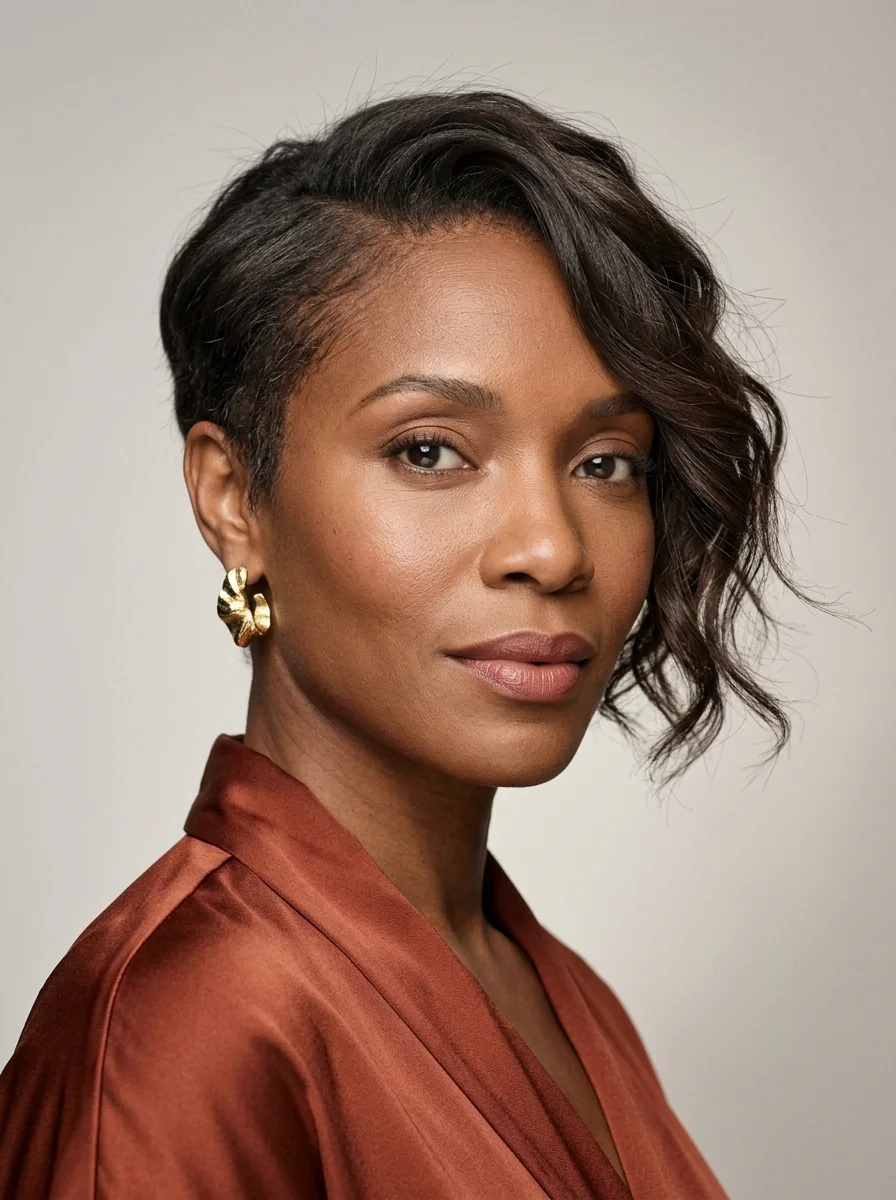
An asymmetrical wavy pixie keeps one side longer so the wave falls toward the cheek, while the opposite side stays shorter and lighter. The uneven length gives the haircut interest even when the wave pattern is simple.
Keep the longer side connected through the crown so it does not look disconnected from the rest of the cut. Wear the wave forward for a softer effect or tuck it behind the ear to show the asymmetry more clearly.
10. Wavy Pixie With a Temple Swoop
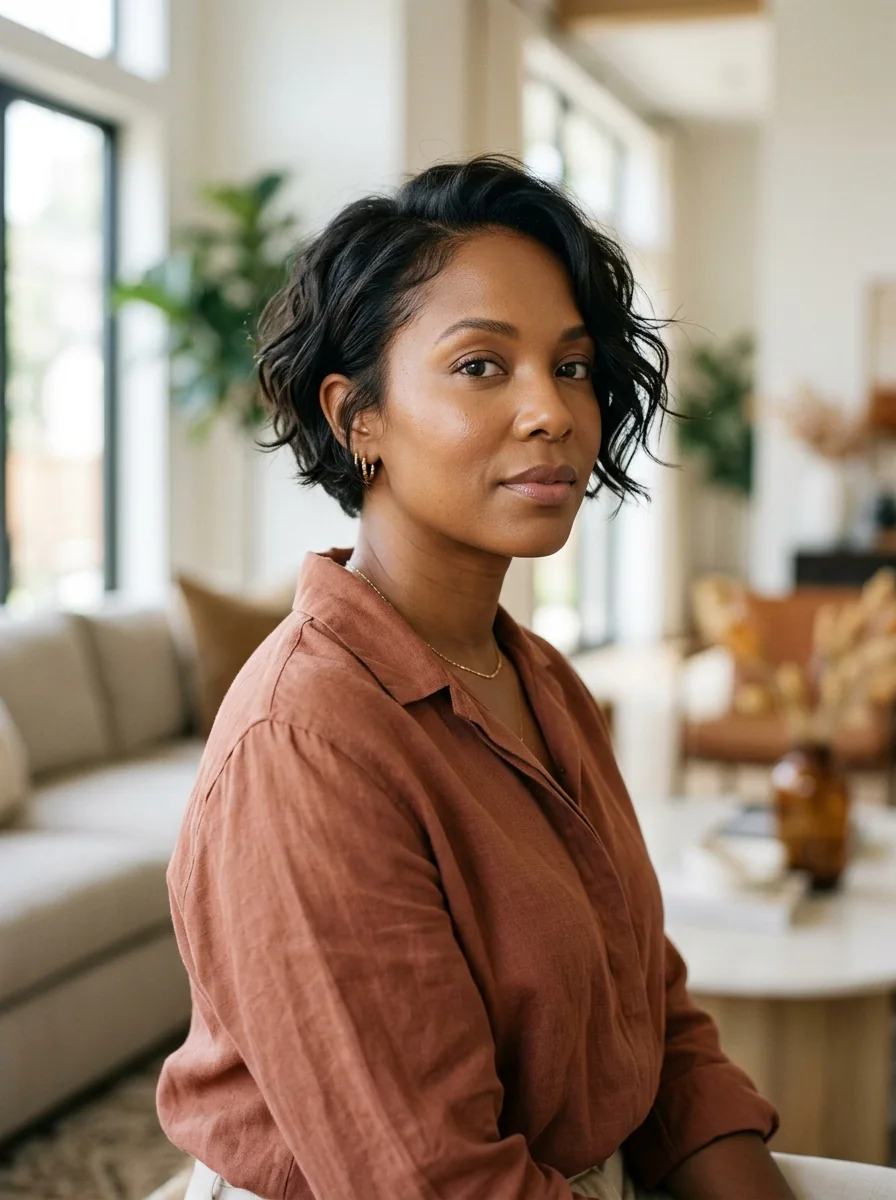
A temple-swoop pixie uses one longer section near the temple that curves toward the eye or cheekbone. The rest of the haircut remains short, so the small sweep creates a graceful detail without requiring a long fringe.
Direct the swoop while the hair is damp and secure it with a light pin until it dries if needed. Keep the curve smooth but not flat, because a little lift at the root helps the detail blend into the crown.
11. Mixed Wave-and-Curl Pixie
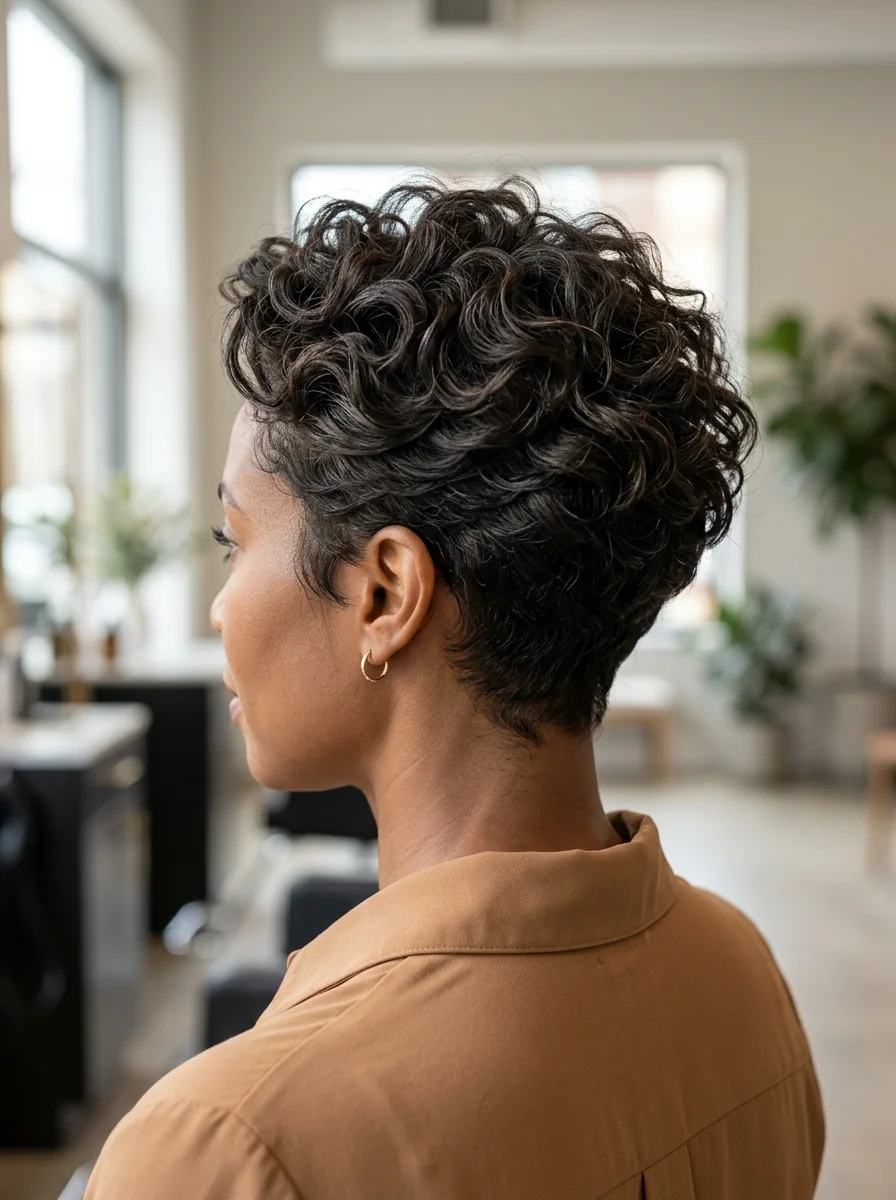
A mixed wave-and-curl pixie allows the crown to keep a looser wave while the front or ends form tighter curls. The variation makes the haircut look dimensional and works well when your natural texture already changes across different areas.
Do not force every section to match perfectly. Use one lightweight product throughout, then add a little extra definition only where the curls need help so the finished style still feels connected.
12. Wet-Look Wavy Pixie
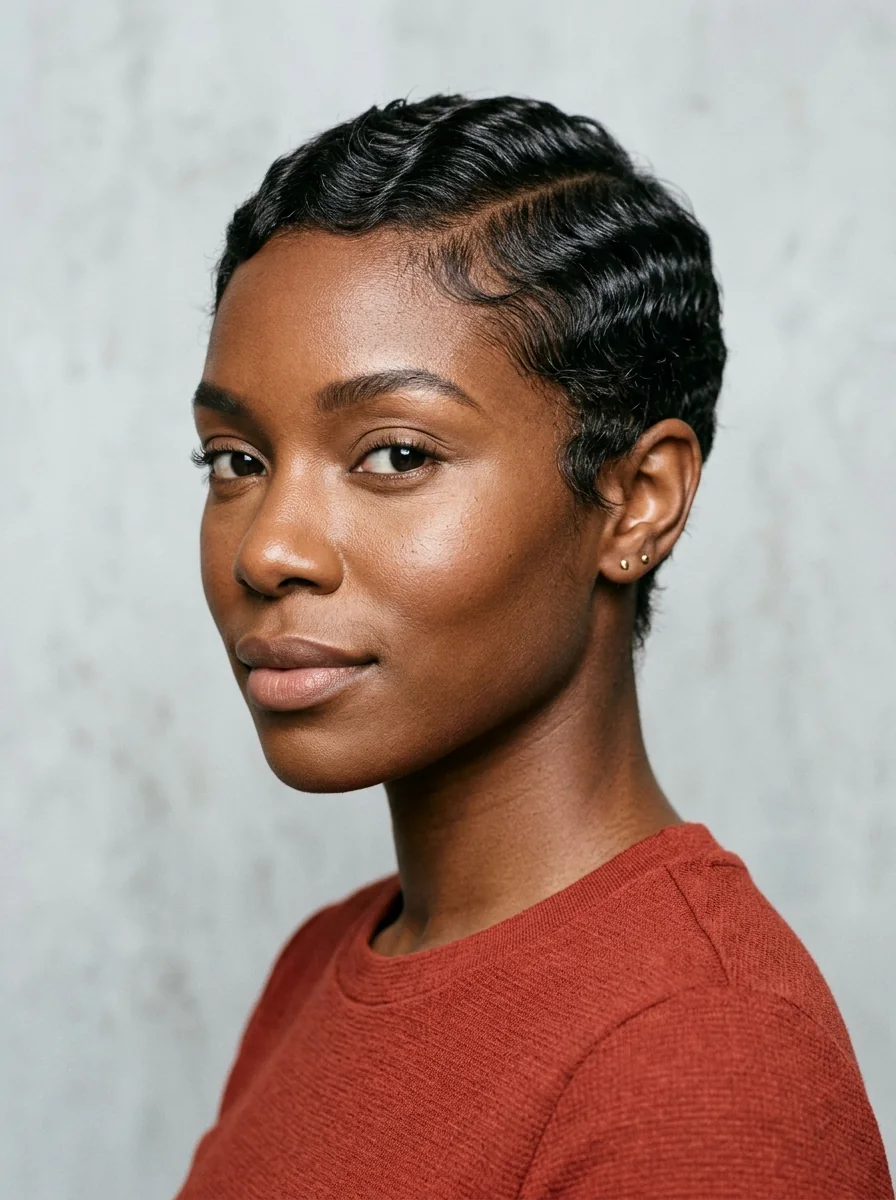
A wet-look wavy pixie groups the waves together with gel for a sleek, glossy finish. The short sides make the shine and texture through the top easy to see, giving the haircut a polished evening feel.
Apply product to very damp hair and shape the waves with your fingers or a comb. Let the style dry fully before touching it, then smooth the surface with a small drop of serum if the finish needs more shine.
13. Low Taper With Crown Waves

A low-taper wavy pixie keeps only the lower sides and neckline closely shaped while leaving more fullness around the temples and crown. The result feels softer than a high taper because the wave is allowed to connect more fully around the head.
This is a useful option if you want a short haircut without a sharply exposed perimeter. Ask for gradual blending around the ears and let the crown dry in its natural direction so the shape does not require much daily correction.
14. Short Wave With a Defined Edge
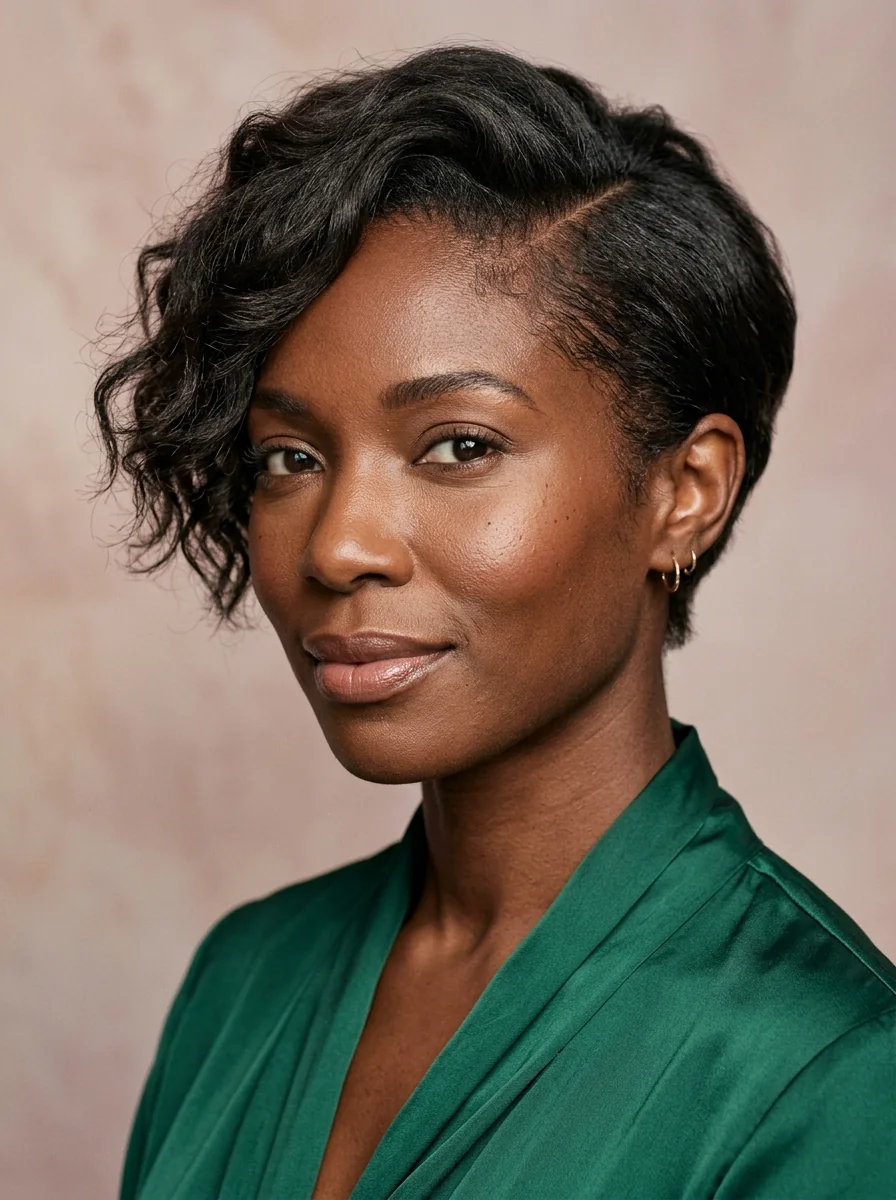
A short wave with a defined edge combines a close, glossy wave pattern with a carefully shaped forehead and temple line. The haircut stays compact, but the perimeter gives it a deliberate finish that works for both everyday wear and formal occasions.
Keep the edge close to your natural hairline and avoid moving it farther back to make the line look sharper. A satin wrap at night can preserve the waves and reduce the amount of edge brushing needed in the morning.
How to style a wavy pixie
Choose the styling method according to the finish you want, because mousse creates flexible movement while gel creates more control and shine. Apply products to damp hair, shape the wave once, and give it time to dry before deciding whether it needs more work.
Heat can create a smooth wave, but it should not be the only way you style the cut. Use a heat protectant, keep the temperature moderate, and give the hair regular breaks with air-dried, twist-out, or scarf-set texture.
For tighter texture, read our guides to curly pixie hairstyles for Black women and coily pixie hairstyles for Black women. You can also compare the full range of shapes in our guide to pixie cut hairstyles for Black women.
A wavy pixie looks best when the wave has room to move. Choose a cut that supports your natural pattern or your preferred setting method, and keep the perimeter simple enough that the texture remains the star.
Frequently asked questions
Can Black women wear a wavy pixie cut with natural hair?
Yes, a natural wavy finish can be created with stretching, twists, braid-outs, or a light defining routine, depending on your texture.
A stylist can shape the cut around the way your hair naturally bends instead of forcing every section into the same wave.
Are finger waves difficult to maintain on a pixie cut?
Finger waves need a little practice and a firm setting product, but the short length makes the pattern easier to control.
A satin scarf at night can help preserve the shape so you only need to smooth small sections the next day.
How do I keep a wavy pixie from looking flat?
Create lift at the roots before the hair dries and avoid applying heavy product directly to the crown.
A little mousse, a low-airflow diffuser, or gentle root lifting after the style is dry can add height without breaking the waves.